 0
 0
Eating to support your workouts comes down to three habits: fuel before you train, get protein afterward, and keep your daily meals steady enough that your body never feels like it’s running on empty. Most people can set this up in a single afternoon of planning, no calorie-counting app or complicated meal prep required.
Here’s why it works. Carbohydrates give your muscles the energy to move well, protein repairs and builds what your workout breaks down, and water and a little salt keep everything running smoothly. Get those basics right and you’ll feel the difference fast: stronger sessions, better recovery, steadier energy through the afternoon slump.
The best part is how ordinary the food can be. A banana with peanut butter before a morning workout. Greek yogurt and berries afterward. A dinner plate that’s about a third protein, a third colorful vegetables, and a third grains or potatoes. It’s comfortable, it’s satisfying, and it fits into a life that already includes good coffee, weekend plans, and clothes you love moving in.
Below, you’ll find what to stock, how to eat safely around your training, a step-by-step plan, and simple ways to tell it’s working.
What You’ll Need Before You Start: Your Fitness Nutrition Toolkit
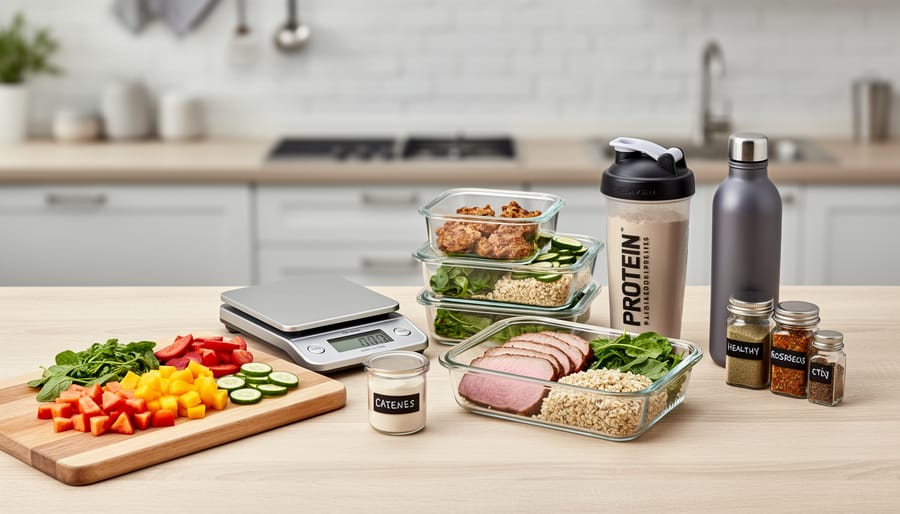
You don’t need a full kitchen overhaul to eat well for your workouts. Think of this as a few small upgrades to the routine you already have, the kind that make good choices feel easier and a little more put-together.
Here’s the short list worth gathering before you begin:
- A reusable water bottle you genuinely like carrying, so hydration happens without effort.
- Three or four meal-prep containers that stack neatly and close securely.
- Measuring cups or a basic kitchen scale, which are completely optional but handy for learning portions.
- A notes app or small journal for jotting down how meals and snacks make you feel.
- Protein sources you enjoy, such as eggs, Greek yogurt, chicken, tofu, or canned beans.
- Whole-grain carbs like oats, brown rice, quinoa, or whole-wheat bread.
- Healthy fats including nuts, nut butter, olive oil, and avocado.
- Colorful produce, fresh or frozen, to keep meals bright and varied.
Start with what you already own. A water bottle from your gym bag and a few containers from the back of a cupboard work perfectly well, and you can upgrade later if you want to.
The notes app deserves a quick mention because it’s the most underrated item here. You’re not counting anything or grading yourself. You’re simply writing a line or two, like “oatmeal before the morning run felt light and steady,” so you can spot what makes you feel energized and comfortable over time.
As for the pantry, aim for staples you’ll actually reach for, not an aspirational shelf that goes untouched. Frozen berries, a bag of rice, and a jar of peanut butter will carry you further than a cart full of trendy ingredients you’ve never cooked with.
Before You Change How You Eat: Safety Notes and When to Pause
Before you tweak a single meal, a quick check-in with yourself (and ideally a professional) goes a long way. Feeling good in your body starts with taking care of it, and that means treating this routine as support, not a test you have to pass.
If you have a medical condition, take regular medication, are pregnant or nursing, or have a history of disordered eating, please talk with a doctor or a registered dietitian first. They can tailor things to your body, your goals and your history, which no generic plan can do. There’s zero shame in asking for backup. It’s one of the most stylish moves you can make.
Those signals matter. Lightheadedness, constant exhaustion, or a knot of worry every time you plan a meal are your body’s way of saying “slow down.” Listen, ease off, and reach out for support. Your physical and mental health are partners here, and a routine that strains one will eventually strain the other.
One more thing worth saying plainly: crash diets, extreme restriction and skipping meals have no place in this approach. The rapid weight loss risks are real, and they tend to backfire on energy, mood and workouts alike. We’re building something comfortable and flexible that you can keep up for the long haul.
Your Step-by-Step Fitness Nutrition Plan
Start With Your Goals and Your Week
Before you think about food, get clear on what you actually want from your routine. Maybe it’s steady energy for a packed workday, strength you can feel in your lifts, or simply feeling good in your favorite jeans. There’s no wrong answer, and your goal can shift as the seasons do. Pick one or two that feel true to you, then note how many days a week you realistically move. Three walks and two gym sessions counts. So does a daily yoga flow.
From there, the plate comes next. A simple balanced plate beats a complicated meal plan every time, and the benefits of a healthy diet show up faster when eating feels easy rather than strict.
Here’s the full flow you’ll build across the next few sections, starting with the first two steps:
- Define your movement goal and weekly routine: write down what you want (energy, strength, comfort) and the days you’ll move.
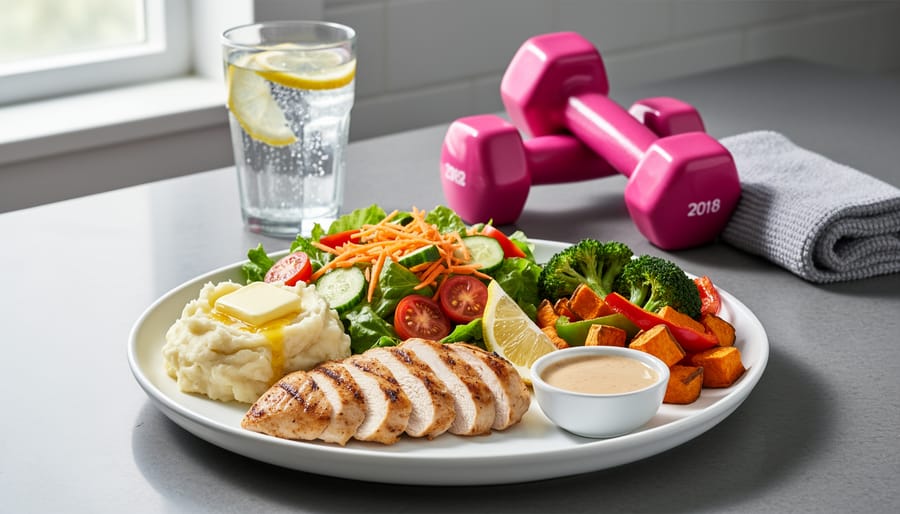
- Build a balanced plate: fill about a quarter with protein, a quarter with carbs, add a thumb of healthy fats, and cover the rest with color from vegetables or fruit.
- Time meals and snacks around workouts so you feel light and fueled.
- Hydrate through the day, not just during exercise.
- Prep a few flexible staples you can mix and match.
- Plan a go-to option for busy, on-the-go moments.
- Leave room for favorites and rest days.
For step two, think of the plate as a template, not a rulebook. Grilled chicken, tofu or eggs for protein; rice, sweet potato or whole-grain toast for carbs; avocado or olive oil for fats; and whatever colorful produce looks good that week. Swap ingredients freely based on your tastes and budget. If your plate feels satisfying and leaves you comfortable, you’re on the right track.
Fuel Around Your Workouts Without Overthinking It
Step 3 is eating a little something before you move. You don’t need a formal pre-workout meal. If you’re training within an hour or two, reach for something light and easy to digest: a banana with a spoonful of nut butter, toast with honey, or a small yogurt with fruit. If you’ve got more time, say two to three hours, a fuller meal with carbs and a modest amount of protein works well. Skip anything heavy, greasy, or very high in fiber right before you train, since those are the usual culprits behind that sloshy, uncomfortable feeling mid-workout. Everyone’s stomach is different, so treat these as starting points and let your notes app tell you what actually feels good.
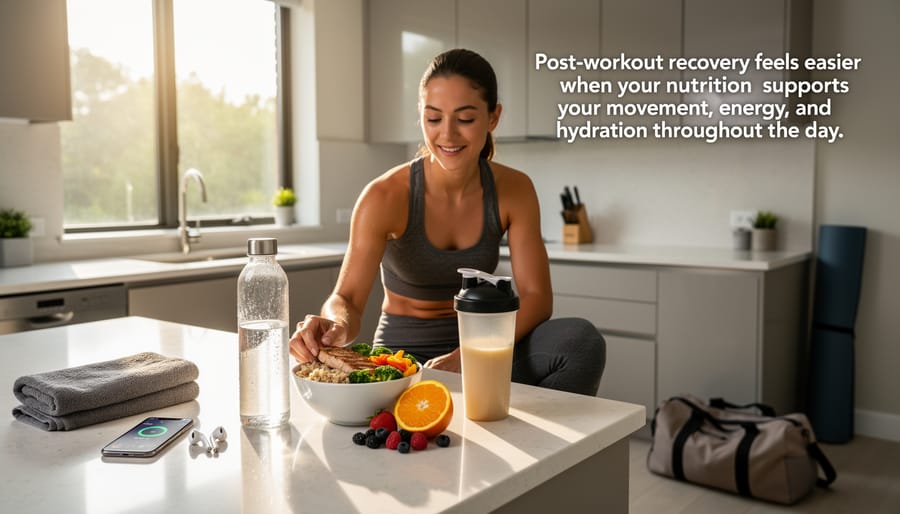
Step 4 is refueling afterward. Within a couple of hours of finishing, aim for a mix of protein and carbs to help your body recover. That could be a veggie-packed omelet with toast, a grain bowl with chicken or tofu, or a smoothie with fruit and protein powder if you’re short on time. Don’t stress about a precise “window.” Eating a balanced meal when you’re hungry after a workout is plenty.
Hydration deserves a spot here too. Sip water through the day rather than chugging it all at once, and keep that reusable bottle within reach. If your session runs long or you sweat a lot, a pinch of salt or an electrolyte drink can help. A simple check: pale yellow urine usually means you’re doing fine.
Finally, keep things light and comfortable around training. Smaller portions closer to your workout, bigger meals further away. If you’re doing an early class, a few bites of something simple beats going in empty and feeling shaky. The goal is to feel energized and steady, not stuffed or sluggish, so you can move with ease and still feel like yourself afterward.
Prep, Plan and Make It Part of Your Style of Living
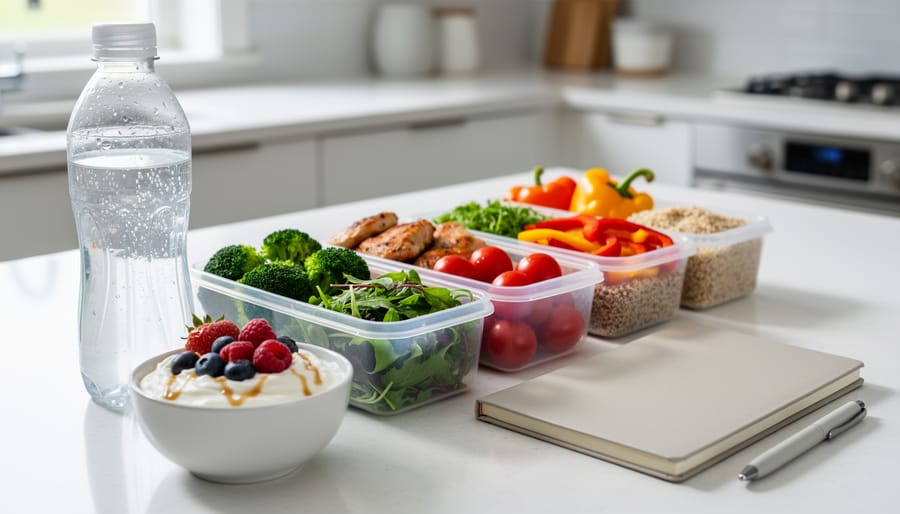
Step 5 is to batch a few flexible staples. Pick one afternoon, often Sunday, and cook the building blocks rather than whole meals: a tray of roasted vegetables, a pot of rice or quinoa, a lean protein like grilled chicken, baked tofu or boiled eggs, and a simple sauce you love. Store them in your containers and mix and match through the week. A grain bowl on Monday becomes a wrap on Wednesday, and nothing feels repetitive. Keep it to three or four staples so prep takes an hour, not your whole weekend.
Step 6 is to pack a polished grab-and-go snack. This is the small habit that quietly saves your day. Think of something that looks as good as it tastes and travels well: Greek yogurt with berries in a jar, apple slices with almond butter, a little tin of mixed nuts and dark chocolate, or a hummus box with crunchy veggies. Tuck one in your gym bag or tote so you’re never stuck choosing between a vending machine and skipping a meal. When your snack is ready and pretty, you’re far more likely to actually reach for it.
Step 7 is to leave room for real life. Brunch with friends, a slice of birthday cake, a long dinner out, a full rest day with nothing planned. These aren’t slip-ups. They’re part of a routine you can enjoy for years. A helpful rule of thumb is to nourish yourself well most of the time, then relax without guilt when the moment calls for it. Rest days matter just as much as workouts, so let your body recover and eat in a way that feels comfortable.
When prepping, planning and flexibility all work together, your routine stops feeling like a chore. It becomes a quiet backdrop to a life that feels polished, energized and entirely your own.
How to Tell It’s Working and What to Tweak Next
Progress rarely shows up first on the scale. Start by noticing how you feel day to day. Are your energy levels steadier through the afternoon? Do workouts feel more doable, and do you bounce back faster the next day? Better sleep, a brighter mood and clothes that feel comfortable on you are all signs your routine is doing its job.
Give your routine two to three weeks before judging it. Jot a quick note after workouts about how you felt, and patterns will start to jump out. If you’re hungry soon after meals, try adding a bit more protein or a larger portion at lunch. If you feel sluggish mid-workout, shift your pre-workout snack earlier or make it lighter. If a food leaves you uncomfortable, swap it for something that sits better. Change just one thing at a time so you can tell what actually helped.
Pay attention to rest and recovery too, since they’re part of how your body responds to fuel. Slowing down, sleeping well and finding your own version of stress-free wellness all make your nutrition work harder for you.
Know when to loop in a professional. If your energy stays low, your workouts keep suffering, you feel anxious around food, or you have a medical condition that makes the right adjustments unclear, a doctor or registered dietitian can tailor things to you. Asking for support isn’t a setback. It’s a smart way to keep your routine feeling good for the long haul.
Fitness Nutrition Questions, Answered
Here are quick answers to the questions that come up most. Think of them as starting points, then adjust to what feels good in your own body.
Do I need to eat before every workout?
Not necessarily. A light, easy-to-digest snack like a banana or toast can help if you feel low on energy, but plenty of people train comfortably on an empty stomach for shorter sessions. Notice how you feel and go with what works.
How much protein is enough?
It varies with your body, your goals and how often you train, so there’s no single magic number. A palm-sized portion at most meals is a friendly starting point, and a doctor or registered dietitian can tailor it to you.
Can I do this on a budget?
Absolutely. Staples like eggs, oats, beans, frozen fruit and veggies, and rice go a long way, and batch-prepping keeps costs down and waste low.
What if I train early in the morning?
Try a small bite you tolerate well, such as a few crackers or a piece of fruit, then eat a fuller meal afterward. If food feels heavy that early, a sip of water and a solid post-workout breakfast can be enough.
Supplements are the other big question. Most people build a strong routine from whole foods first, and add-ons are optional extras rather than essentials. If you’re curious about wellness products, it helps to look at the evidence before you buy, and our guide to THC and CBD science is a good example of how to weigh what the research really says.
Eating out? Skip the guilt. Pick something you’ll enjoy, add a veggie or a protein if it’s easy, and let the rest be part of a well-lived week.
Fitness nutrition works best when it’s simple, flexible, and comfortable. You don’t need a perfect plate or a spotless meal-prep Sunday. You need a few repeatable habits that fit the way you actually live, and enough room to enjoy the brunches, the treats, and the rest days too.
So don’t try to do everything at once. Pick one step from this guide and try it this week. Maybe it’s packing a polished grab-and-go snack, building a balanced plate at dinner, or simply keeping your water bottle within reach. Small moves, repeated, add up faster than big overhauls you can’t maintain.
Notice how you feel as you go. Steadier energy, stronger workouts, and better sleep are the real wins. When you nourish your body with care instead of pressure, it shows in how you move, how you feel in your favorite outfit, and how you show up for everything the day holds.