 0
0
 0
0
That luminous glow sweeping across your cheekbones? It’s mica, a naturally occurring mineral family that’s been the beauty industry’s secret to shimmer for decades. Found deep in the Earth’s crust, mica’s unique layered structure acts like microscopic mirrors, reflecting light to create everything from subtle radiance to festival-ready sparkle. You’ll spot it listed as “Mica” or “CI 77019” on ingredient labels, and it’s everywhere: eyeshadows, highlighters, lipsticks, nail polish, and even those Instagram-worthy decorative soaps.
The magic lies in how thin mica plates scatter light, producing that coveted sheen without looking glittery or synthetic. As consumers demand more transparency about what they’re putting on their skin, understanding mica becomes essential, especially since the global gemstone cosmetic powder market is climbing toward $1.72 billion by 2030. But this ingredient comes with questions about sourcing ethics, safety standards, and whether that dewy finish is worth potential trade-offs.
Whether you’re building a clean beauty routine or simply curious about what makes your favorite products glow, knowing your mica means making smarter, more confident choices. Here’s everything you need to decode this shimmering staple and shop with both style and substance in mind.
The Science Behind the Shimmer
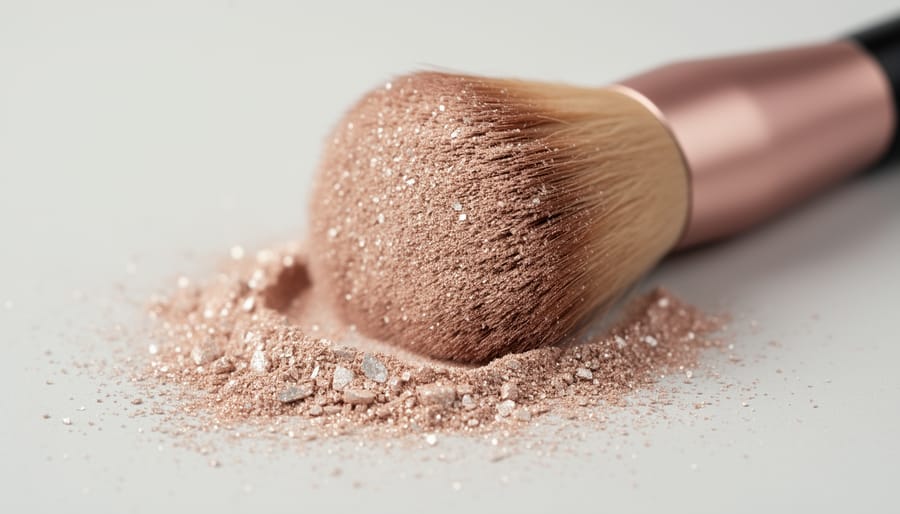
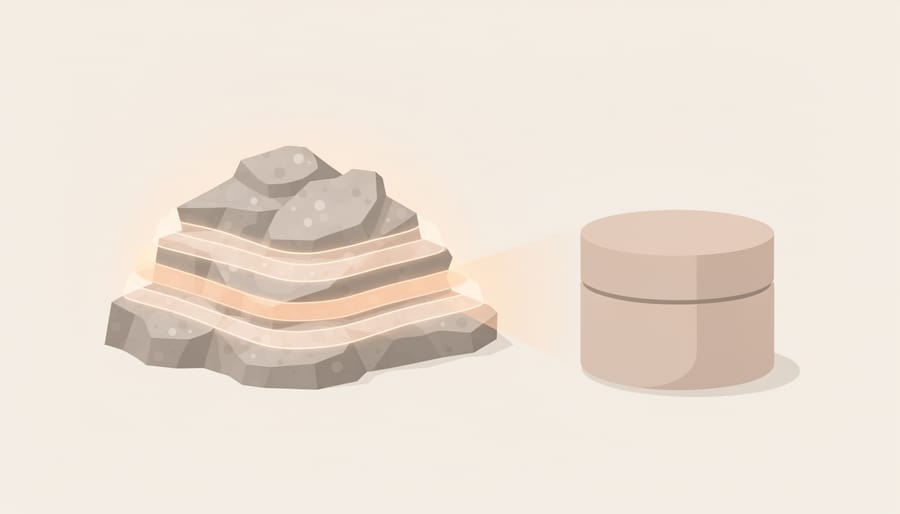
Mica isn’t just one mineral, it’s an entire family of naturally occurring minerals embedded in the Earth’s crust. What makes this group special is their distinctive layered structure, almost like a stack of ultra-thin sheets. When light hits these microscopic layers, it bounces between them, splitting and reflecting at different angles. That interplay creates the shimmering, luminous effect you see when you catch your highlighter in the right light or watch your eyeshadow shift as you move.
Think of mica as nature’s built-in glitter, but far more sophisticated. The layers are so thin and uniform that they create a soft, satiny glow rather than chunky sparkle. This optical property gives mica its edge over alternatives because the effect feels dimensional and catches light from multiple angles, not just one flat plane. It’s why a mica-based highlighter looks radiant in daylight, flattering under indoor lighting, and still glows in photos without looking harsh or glittery.
The size of the mica particles also matters. Finer particles create a subtle, pearl-like sheen perfect for everyday elegance, while larger flakes deliver more dramatic, visible sparkle for nights out. Cosmetic chemists can grind and grade mica to achieve different finishes, which is why some products give you understated luminosity while others pack serious shine. That versatility, combined with mica’s natural origin and proven track record, explains why it remains the gold standard for shimmer in beauty formulations across every price point.
Where You’ll Find Mica in Your Beauty Routine
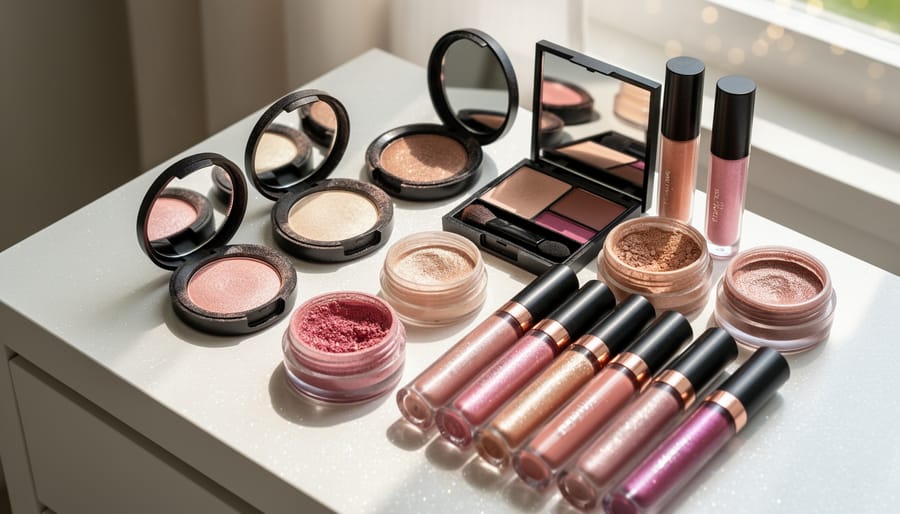
Chances are, mica is already sitting on your vanity, you just didn’t know to look for it. This mineral appears in nearly every category of color cosmetics, working behind the scenes to deliver that luminous, light-catching finish we’ve come to expect from modern makeup.
Eyeshadows and highlighters are mica’s natural habitat. Open any palette, especially those labeled “shimmer,” “metallic,” or “satin,” and you’ll find mica creating depth and dimension. In highlighters, it sits at the top of the ingredient list, responsible for that coveted glow that catches light from every angle. The mineral’s layered structure does more than just sparkle, it creates a soft-focus effect that can make skin appear smoother and more radiant.
Powders rely on mica for more than shimmer. In setting powders and bronzers, it contributes to a silky texture that glides across skin without looking chalky or flat. Even products marketed as “matte” often contain small amounts of mica to prevent a completely dead finish, adding just enough light reflection to keep skin looking naturally luminous rather than lifeless.
Lipsticks use mica to create everything from subtle sheen to full metallic finishes. That pearlescent quality in your favorite nude? Mica. The gleaming chrome effect in bold statement shades? Also mica, working in combination with other pigments to reflect light in specific ways.
Nail polish formulations incorporate mica for shimmer and depth, particularly in metallic and iridescent shades. Some illuminating skincare products now include mica for an instant radiance boost, blurring the line between makeup and treatment.
Even decorative soaps contain mica for visual appeal, though in cosmetics, its role extends beyond aesthetics, it fundamentally shapes texture, finish, and how products perform on your skin. Understanding where mica appears helps you predict how a product will look and feel before you ever open the package.
Spotting Mica on Your Ingredient List
Reading a cosmetic ingredient list doesn’t have to feel like decoding a chemistry textbook. When you’re hunting for mica in your makeup, it’s refreshingly straightforward, you’ll see it listed simply as “Mica” in the ingredients panel. That’s the most common way brands identify this shimmering mineral, making it easy to spot whether you’re scanning an eyeshadow palette or a bottle of nail polish.
Some products take a more technical route and list mica by its colorant designation: CI 77019. This standardized code appears alongside other color additives in formulations, particularly in European markets where the CI (Colour Index) system is widely used. Both terms refer to the same mineral, so if you see either one, you’ve found your shimmer source.
Ingredient lists follow a specific order, components appear by descending concentration until you hit the 1% threshold, after which the order becomes flexible. Mica typically shows up in the first half of the list for heavily shimmering products like highlighters, but might appear further down in formulas where the glow is subtle, like tinted moisturizers with a hint of luminosity.
Want to become truly ingredient-savvy? Check the full list, not just the first few names. Mica often appears alongside other minerals like titanium dioxide or iron oxides, which modify its color and finish. Understanding these combinations helps you predict whether a product will give you champagne shimmer or rose-gold radiance before you even open the compact.
The Booming Market for Shimmer and Shine
The cosmetics industry’s love affair with shimmer isn’t just about aesthetics, it’s a billion-dollar business that shows no signs of slowing down. The global gemstone cosmetic powder market was valued at USD 1.16 billion in 2024 and is projected to reach approximately USD 1.72 billion by 2030. That’s substantial growth driven by consumers who crave luminous, light-catching finishes in everything from everyday makeup to special-occasion glam.
| Market Metric | 2024 Value | 2030 Projection |
|---|---|---|
| Total Gemstone Cosmetic Powder Market | USD 1.16 billion | USD 1.72 billion |
| Tourmaline-Based Segment (36.8% share) | USD 0.43 billion |
What does this expansion mean for your makeup bag? More innovation, more variety, and more accessible shimmer products across price points. Brands are experimenting with particle sizes, finishes, and application methods to meet growing demand for everything from subtle daytime radiance to high-impact metallic looks.
Interestingly, while tourmaline-based alternatives have carved out a significant niche with 36.8% market share, mica remains the foundational mineral in this category. Think of tourmaline as the specialized player for certain effects, while mica continues to be the versatile workhorse that delivers consistent, predictable shimmer across countless formulations. The market growth reflects both minerals finding their place, but mica’s optical properties and cost-effectiveness keep it central to most cosmetic shimmer.
This booming market also signals that ingredient-conscious consumers aren’t sacrificing glow for transparency. The industry is responding with better sourcing, clearer labeling, and more options that let you shine without compromise.
What Regulations Say About Mica Safety
When it comes to the safety of mica in your makeup, the regulatory framework places responsibility squarely on the brands themselves. In Canada, companies must ensure their products meet the standards outlined in the Food and Drugs Act and the Cosmetic Regulations before they reach your vanity. This means manufacturers are accountable for verifying that mica and other ingredients are safe for their intended use.
Mica itself has a long history of use in cosmetics, and regulatory bodies recognize it as suitable for topical application when properly sourced and processed. The mineral appears on ingredient lists either as “Mica” or by its colorant designation, CI 77019, making it straightforward to identify. Because mica is a naturally occurring mineral, quality and purity matter, reputable brands invest in testing to ensure their mica is free from contaminants.
While regulations set the baseline, not all brands go beyond the minimum requirements. This is where your choices as a consumer matter. Look for companies that openly share their sourcing practices, conduct third-party testing, and prioritize transparency about what goes into their formulations. Brands that voluntarily disclose additional safety information or ethical sourcing details demonstrate a commitment to both product quality and customer trust.
Understanding the regulatory landscape empowers you to make informed decisions. You’re not just choosing shimmer, you’re choosing brands that align with your values around safety, quality, and transparency.
Making Mica Work for Your Style
Understanding how to work with mica-based products transforms shimmer from potentially garish to genuinely glamorous. The secret lies in matching intensity to context and building luminosity with intention rather than applying it all at once.
For daytime or professional settings, reach for products with subtle mica content. A cream eyeshadow with light-reflecting properties or a liquid highlighter applied sparingly to cheekbones delivers that coveted fresh-faced glow without announcing itself. Think sheer wash of champagne on lids or a delicate highlight along the brow bone. This approach pairs beautifully with minimalist chic wardrobes, where understated radiance complements clean lines and neutral palettes.
Evening calls for bolder application. Layer pressed powder shadows with higher mica concentration, building from a base shade to intensified shimmer on the lid center. Pat (don’t sweep) metallic formulas for maximum light reflection. A targeted highlighter on the high points of your face creates dimension under artificial lighting without reading as glitter.
The most sophisticated approach balances shimmer with matte. Pair a shimmering eyeshadow with matte transition shades in the crease. Use luminous skin but keep lips matte, or reverse the equation with glossy, mica-enhanced lips and softer eye makeup. This contrast prevents shimmer overload while letting strategic light-catching points elevate your look.
Application tools matter too. Fingertips warm cream formulas and press shimmer onto skin for intensity. Fluffy brushes diffuse powder shimmer for softer effects. A dampened brush transforms any mica-based shadow into a metallic liner or intensified lid color, giving you multiple finishes from one product.
Common Questions About Mica in Cosmetics
When you’re investing in shimmer products that make you feel your best it’s natural to have questions about what’s actually in them. Here’s what you need to know about mica in your cosmetics.
Is mica safe for all skin types?
Mica is generally well-tolerated by most skin types, including sensitive skin. Since companies must comply with regulations like Canada’s Food and Drugs Act and Cosmetic Regulations, products containing mica undergo safety assessments before reaching your vanity.
Can I find mica-free shimmer alternatives?
Yes, you can find synthetic alternatives like tourmaline-based powders, which currently hold a significant 36.8% market share. While mica creates that signature natural shimmer, other minerals and lab-created ingredients can deliver glow if you prefer alternatives.
Does mica expire or lose its shimmer over time?
Mica itself doesn’t expire, but the products containing it do. Store your mica-based cosmetics in a cool, dry place away from direct sunlight to maintain their performance and prevent the binding ingredients from breaking down.
Why does some shimmer look more natural than others?
The particle size of mica determines the effect. Finely milled mica creates a subtle, lit-from-within glow, while larger particles deliver more obvious sparkle. The finish also depends on how much mica the formula contains and what other pigments are layered with it.
Understanding these basics helps you navigate ingredient lists with confidence. When you spot Mica or CI 77019 on your favorite highlighter, you’ll know exactly what’s creating that luminous finish. The booming gemstone cosmetic powder market, projected to reach USD 1.72 billion by 2030, means brands will continue innovating with both natural mica and alternatives, giving you plenty of options to explore. Whether you gravitate toward eyeshadows, powders, lipsticks, or illuminating skincare products, mica remains the mineral that delivers that coveted shimmer across your entire beauty routine.
Now you know the mineral behind that enviable glow. Mica’s light-reflecting properties make it irreplaceable in cosmetics, and understanding its role transforms you from a passive consumer into someone who makes intentional choices about what touches your skin. That knowledge is powerful, it lets you select products that align with your values while still achieving the luminous, polished look you want.
The shimmer market continues to grow precisely because people like you are asking better questions. You’re not choosing between style and substance anymore. You’re reading labels, understanding formulations, and building a beauty routine that reflects both your aesthetic and your commitment to informed living.
That’s what real confidence looks like: knowing what makes you shine, literally and figuratively. When you understand the science behind your favorite highlighter or eyeshadow, you’re not just applying makeup, you’re making choices that honor your well-being and elevate your everyday style. The glow you create is yours, inside and out.